A potential client does not open every platform with the same mindset.
Someone searching on Google may want a direct answer. Someone scrolling Instagram may need a simple explanation. Someone on LinkedIn may be comparing expertise. Someone on Facebook may be looking for local trust. That difference is called search intent, and it should shape how your law firm creates content.
Search intent means the reason behind a person’s search or online behavior. In legal marketing, it matters because people move through different stages before contacting a lawyer. They may start with a basic question, then compare options, then look for proof that a firm is credible.
Clio has noted that legal consumers often look online when choosing a lawyer, and important decision factors include referrals, reviews, free consultations, and clear information. That means your social content should not only attract attention. It should answer the right question at the right stage.
Most legal content falls into three major intent stages.
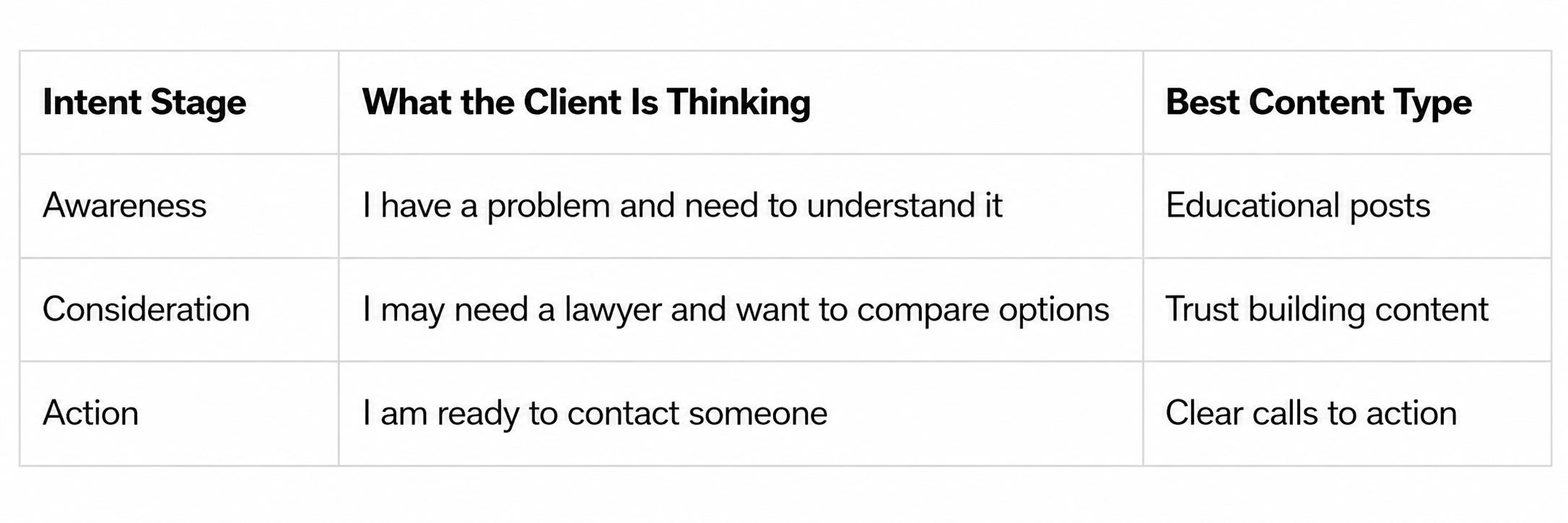
This is why one type of post cannot do everything. A legal tip may build awareness, but it may not directly convert. A testimonial may build trust, but it may not explain the problem. A consultation post may drive action, but only after trust already exists.
Informational intent happens when someone wants to learn.
Examples include:
• What should I do after a car accident
• How does custody work during summer break
• What documents do I need before meeting a lawyer
• What happens after filing a claim
This content works well on Instagram, Facebook, TikTok, YouTube Shorts, and blogs. It should be clear, simple, and focused on one point.
Pew Research Center reported that YouTube, Facebook, and Instagram remain widely used platforms among United States adults, which means educational content can reach people across multiple age groups and client types.
For law firms, informational content builds the first layer of trust. It shows that your firm can explain complicated topics in a way clients understand.
Consideration intent happens when a person is comparing options.
They may not be ready to book yet, but they are paying attention to credibility signals.
This is where content should answer questions like:
• Why should someone trust your firm
• What makes your process clear and supportive
• What experience does your team bring
• How do you communicate with clients
Best content formats include:
• Attorney introduction videos
• Client testimonials when allowed
• Case process explainers
• Reviews and social proof
• Behind-the-scenes posts
• LinkedIn thought leadership
LinkedIn is especially useful for professional credibility. The American Bar Association reported that 80 percent of firms maintain a social media presence, and 78 percent of those firms use LinkedIn.
This tells us that LinkedIn is not just a place to post firm updates. It is a credibility platform where referral partners, business clients, and other professionals evaluate authority.
Action intent happens when someone is ready to take the next step.
At this stage, your content should make contact easy.
Strong action-focused content includes:
• Book a consultation posts
• Practice area service posts
• Website link posts
• Contact reminders
• Frequently asked intake questions
• Short videos explaining what happens during the first call
Action content should be direct, but not aggressive. A potential client needs a clear next step, not pressure.
Examples:
• Schedule a consultation if you have questions about your next legal step
• Visit our website to learn more about how we help
• Contact our office before signing any legal agreement
The mistake many law firms make is posting action content too early and too often. If your audience does not understand the issue or trust your firm yet, direct calls to action may fall flat.
Each platform has a different user mindset.
Instagram: People want quick education, human connection, and easy-to-digest visuals.
LinkedIn: People look for expertise, referrals, business insight, and professional credibility.
Facebook: People respond well to local relevance, community connection, reviews, and practical reminders.
TikTok and Reels: People want fast answers and clear explanations in video format.
Blogs: People want deeper answers and search-friendly information that supports website visibility.
The strongest strategy connects these platforms instead of treating them separately.
One blog can become:
• An Instagram carousel
• A LinkedIn post
• A short video
• A Facebook discussion post
• An email topic
This allows your firm to meet different search intents without creating everything from scratch.
A healthy law firm content plan should include all three intent stages.
Awareness content 50 percent
Consideration content 30 percent
Action content 20 percent
This balance keeps your content helpful while still supporting client growth. Most people need education and trust before they are ready to contact a lawyer.
Search intent helps law firms stop posting randomly.
When you understand what your audience is trying to do on each platform, your content becomes more useful and more strategic. You can educate people who are just beginning to understand their issue, build trust with those comparing lawyers, and guide ready clients toward a consultation.
That is how social media becomes part of the client journey instead of just another marketing task.
Need Assistance with Social Media and/or Digital Marketing?
Leave the marketing to us so you can focus on your practice. As attorneys ourselves, we understand social media for lawyers, from creating content that is not boring and humanizing your law firm to staying within the ethics rules, we have got it covered. Digital marketing for lawyers is a unique space that many general marketing firms do not understand. We work only with lawyers and law firms and have learned what works and what does not from firsthand experience. Let us help you build a strong online presence, attract the right clients, and ultimately stand out in a competitive market. Schedule a consultation today by clicking here.

